
What happens during a typical karate practice?
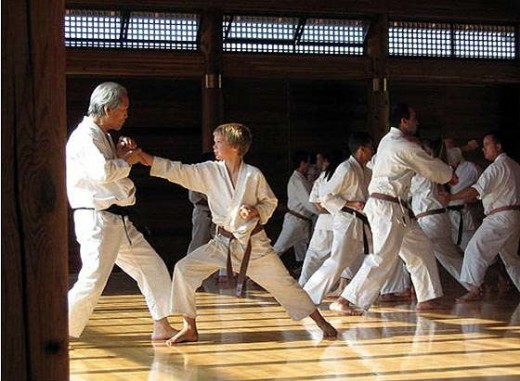
While each practice session is unique, all karate practitioners in SKA practice three basic elements:
- Kihon (basic blocks, punches, kicks, and stances)
- Kata (pre-arranged forms which simulate combat situations)
- Kumite (sparring or fighting)
How much does it cost?
The Emerald Isle dojo is housed in the Emerald Isle Community Center and is part of the Parks and Recreation program. While the dojo itself doesn’t charge dues, the Community Center does. The current fee is $5 per class for members, $10 for non-members.
In order to test in rank examinations, dojo members must join SKA. Membership in SKA costs $125 until the member become a black belt, at which point the annual membership is $250.
What do I get as a member of SKA?
When you join SKA, you receive an ID card and a student handbook, which provides detailed information about SKA and karate practice. Members of all ranks are welcome to practice at any SKA dojo around the world, attend major events such as Special Training and Nisei Week, and participate in educational seminars. There is no charge to grade for any rank in SKA.
Why shotokan karate?
Karate practice emphasizes not just physical training, but mental training as well. Students who practices regularly develop physical stamina, strength, and coordination, as well as improved mental clarity and focus. Ultimately, the goal of traditional karate practice is the perfection of the student through the martial art. SKA differs from some other Japanese karate styles due to its emphasis on improving the self rather than focusing on sport tournaments.
Do I have to be in great physical shape to start?
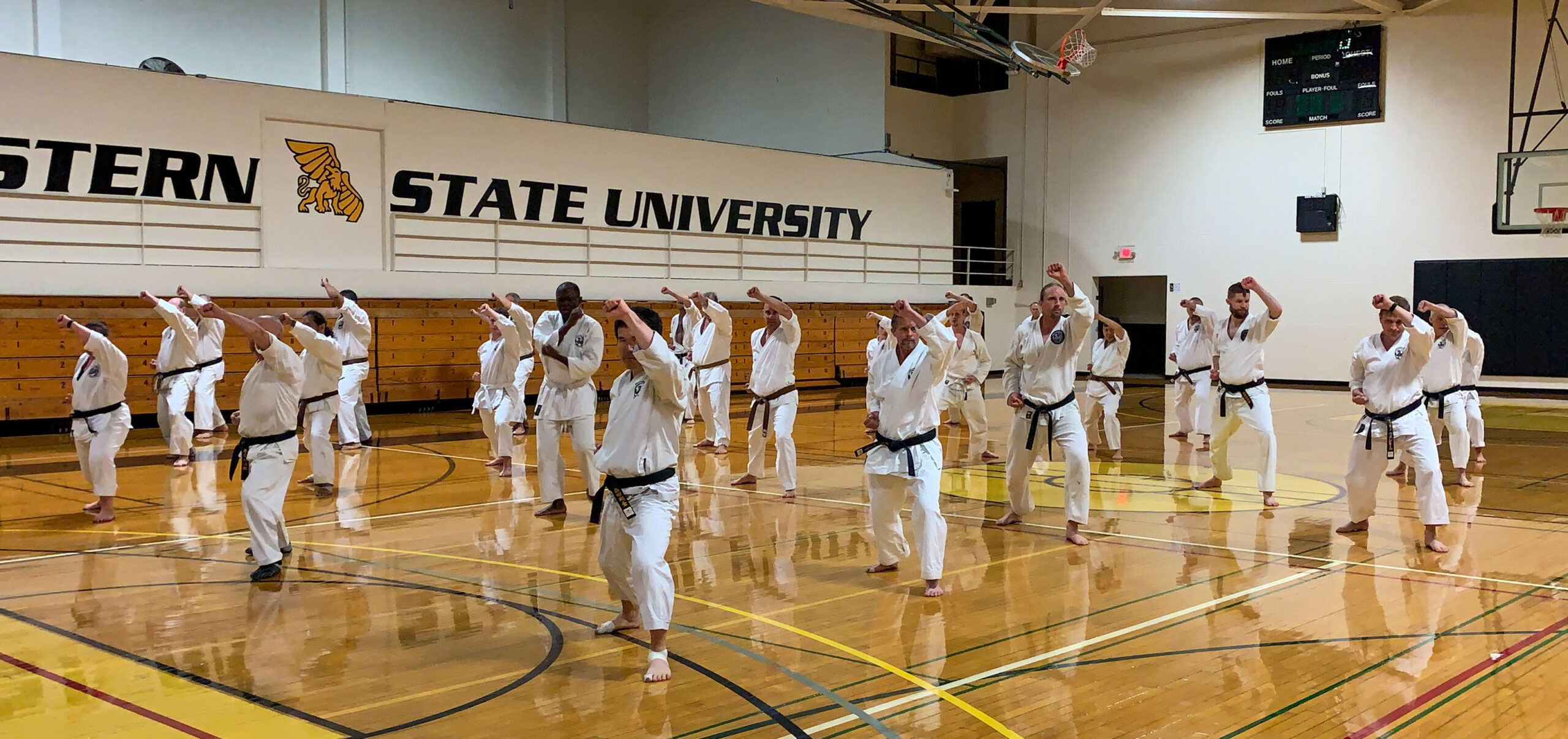
No. All students, regardless of their level of conditioning, start gradually as they learn new ways of moving their body. However, their bodies will quickly adapt to the new demands being placed on them, allowing them to work harder and more efficiently.
If I train regularly, how long will it take to obtain a black belt in the SKA organization?
On average, it takes karate practitioners in SKA five years if they train at least three days per week and practice at home on their own. Visit our Schedule page.
Is karate suitable for children and adolescents?
We prefer our students to be 12 or older because of the shorter attention spans of children that may make it difficult for them to concentrate in class. However, we recognize there’s no one size fits all approach, and we welcome anyone with the focus necessary to train.

How do I get promoted in the SKA organization?
Twice a year (November and April), SKA dojos conduct gradings for white and brown belts. Black belt tests are held once a year in the summer. Unlike in other karate styles, in SKA there are only three belt colors: white, brown, and black. However, there are 13 levels within those three colors. There are five levels for white belt, three for brown belt, and five for black belt.
A level in white and brown belts is called a kyu. A level in black belt is called a dan. The leader of the Emerald Isle dojo, Karen Frost, is a san-dan or third-degree black belt.
What equipment does a new student need to start practice?
For students committed to learning karate, we require a karate gi (loose fitting white training garment). Gis are tied with an obi, or belt. Once the student has acquired a gi, the instructor or senior students will show them how to tie their belt properly. For the first or second class, however, it is permitted to wear athletic clothing.
No jewelry or shoes are allowed on the training floor. This is for the safety of both the student and their training partners. For sparring, students should have mouth guards and fighting gloves.
Who can train in karate?
Anyone! SKA has welcomed everyone from children to nonagenarians.
So how do I start karate practice?
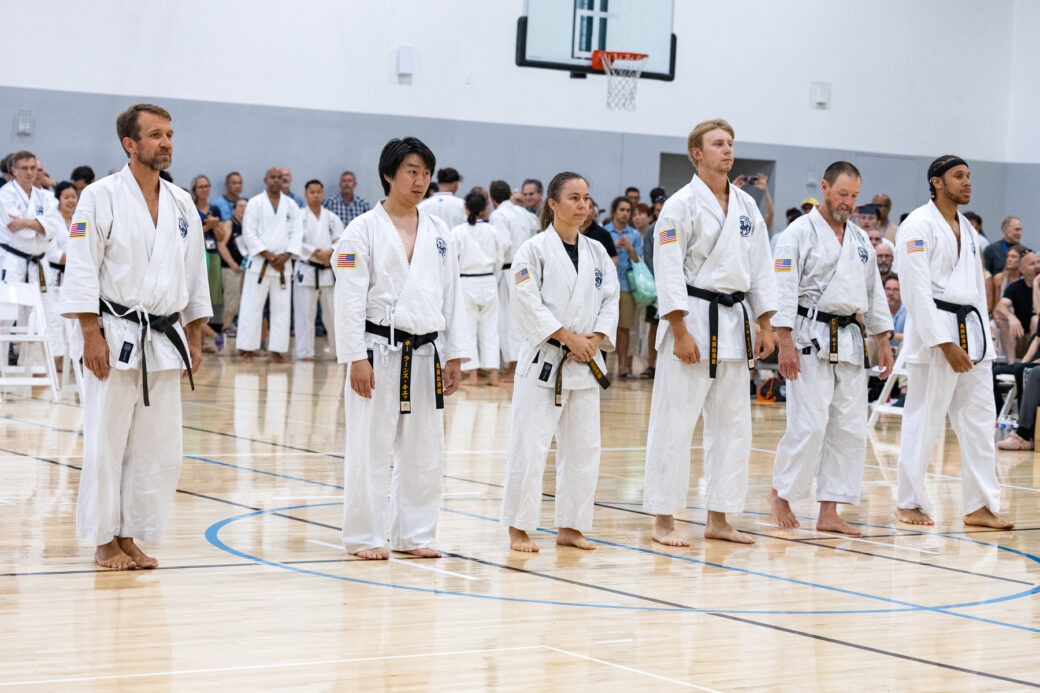
Come visit us and either watch or participate during any of our scheduled practices. You can also email our dojo leader by filling out the form on the Contact page.